By Qwinn Selmer-Spong, University of Denver, majoring in Kinesiology, 2028 with supervision from Gina Inglese, MS, OTR/L, CCTS-I, CSOT.
Why does someone get bottom surgery?
The main reason someone gets bottom surgery is to align their anatomy with their identity. This can help lessen gender dysphoria, an emotional distress a person feels when their identity doesn't match the sex they were assigned at birth. Some of these surgeries may also be performed for other reasons unrelated to gender, such as hysterectomy or orchiectomy for cancer, severe endometriosis, or other life-threatening conditions.
What different types of bottom surgeries are there?
We can categorize these surgeries into two main categories: Feminizing procedures and masculinizing procedures. It is important to note these two categories are not all-encompassing, and the surgeries below may be performed for purposes outside these binaries.
Feminizing Procedures
• Vaginoplasty: Constructs a functional vaginal canal, labia, and clitoris using existing genital or peritoneal tissue. This surgery requires lifelong dilation.

Vaginoplasty Illustration
This is one version of what pelvic floor and related organ anatomy may look like post vaginoplasty.
Image used with permission from Pelvic Guru®, LLC as a Pelvic Global Member
• Vulvoplasty (Zero-Depth Vaginoplasty): Constructs external clitoris and labia without a vaginal canal. This option is less invasive than a vaginoplasty, but does not allow for full-depth penetration. This means lifelong dilation is not required.
• Orchiectomy: A surgery to remove one or both testicles. This can be performed for cancer prevention/treatment or gender-affirming purposes. This causes a major drop in testosterone levels.
• Labioplasty: This surgery's main purpose is to shape and define the labia majora and minora for functional and/or aesthetic purposes. This is done for both trans women after a vaginoplasty or vulvoplasty surgery, if desired, or cis-women.
• Penectomy: Surgical removal of a part or all parts of the penis. The main reason patients get this is for penile cancer, severe trauma or infection, or gender affirming purposes. If part of gender affirming surgeries, it can be done by itself or as part of a vaginoplasty.
Masculinizing Procedures
• Phalloplasty: Construction of a penis using a free skin flap, typically from the forearm, thigh, abdomen, or back. It is often combined with urethral lengthening and scrotoplasty, depending on the patient’s preferences and medical capacity. Additionally, a patient may opt for an erectile device placement — either a malleable implant or an inflatable implant. If receiving urethral lengthening for phalloplasty, electrolysis is required prior to surgery at the donor site. There are many variations of this surgery that are personalized from patient to patient and often involve multiple procedures.
Illustrations of a Phallus Post Forearm Flap Phalloplasty
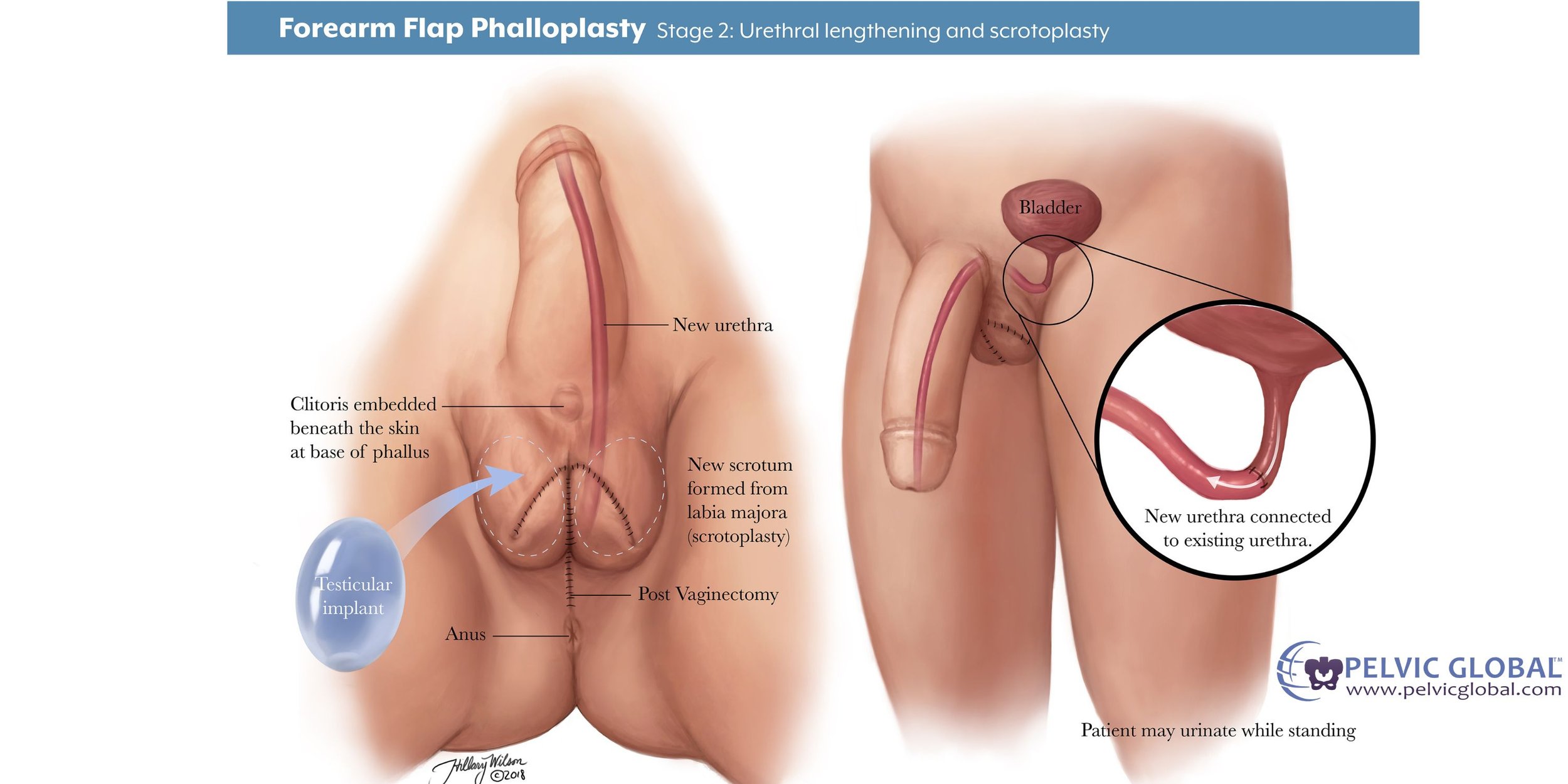
Urethral Lengthening and Scrotoplasty
Image used with permission from Pelvic Guru®, LLC as a Pelvic Global Member
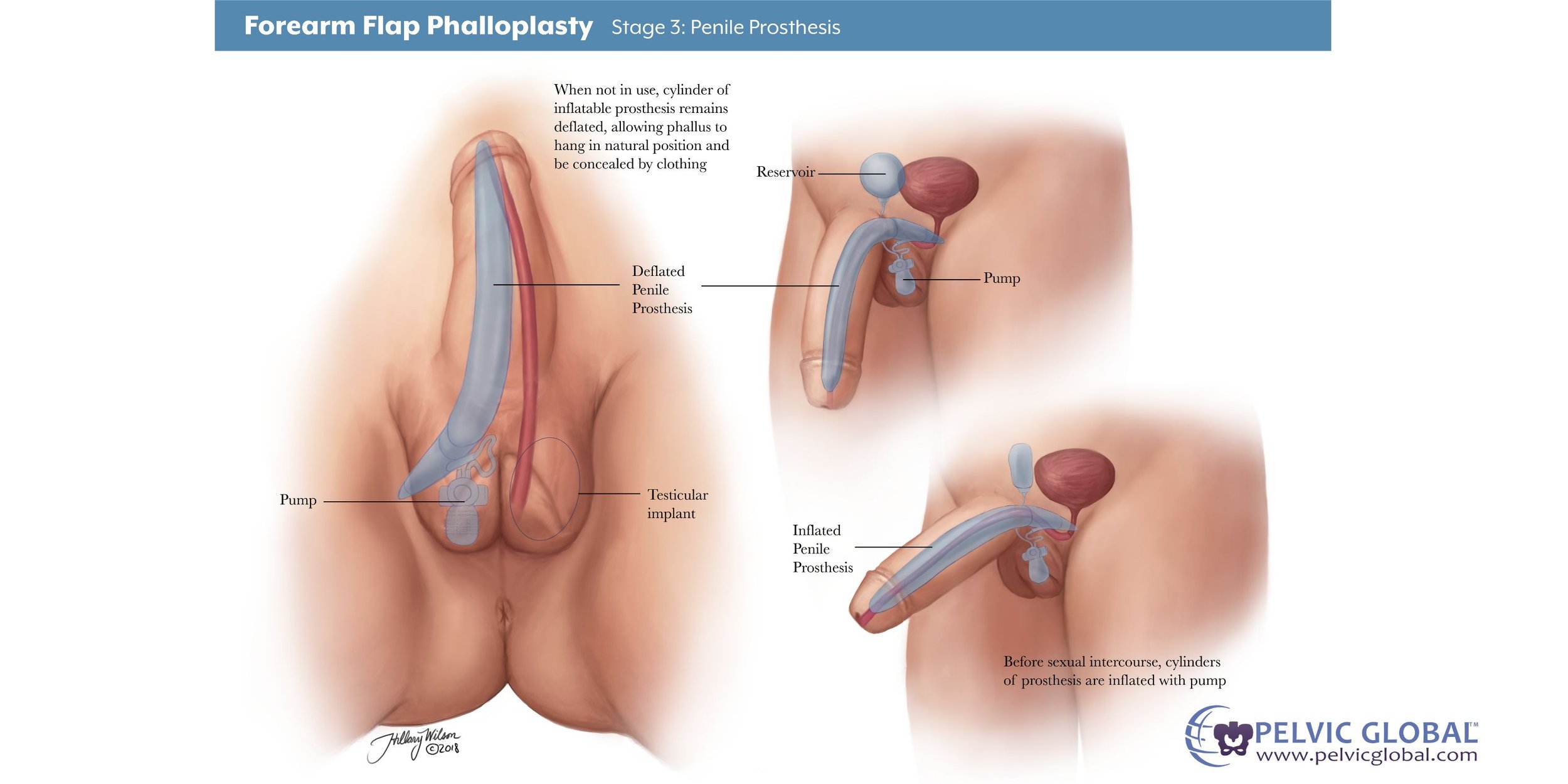
Erectile Pump Device
Image used with permission from Pelvic Guru®, LLC as a Pelvic Global Member
• Metoidioplasty: Releases and uses the enlarged clitoris (clitorus is enlarged from testosterone therapy use for at least 1-2 years) to construct a penis out of the clitoris, preserving natural erectile and sensory function.
• Scrotoplasty: Creates a scrotum using labial tissue, with the option to insert testicular implants. This can also be used for cisgender men who want a reduction or lift.
• Hysterectomy & Salpingo-oophorectomy: Surgical removal of the uterus, cervix, fallopian tubes, and/or ovaries.
• Vaginectomy: Surgical removal and closure of the vaginal canal. Can be for treatment of vaginal cancer or gender affirming surgery and can be partial, total, or radical.
• Urethroplasty: Repairs, reconstruction, or lengthening of the urethra. Allows for urination while standing up.
How does pelvic floor therapy help with bottom surgery?
Pelvic floor therapy can be extremely helpful for the entire process of gender affirming surgeries. Below are treatment options for how pelvic floor therapy can support pre-surgical care and post-surgical care for bottom surgeries.
Surgical Preparation
Anxiety and stress management techniques to ease fears going into surgery
Training in healthy bowel and bladder habits to optimize pelvic health and prepare these symptoms for post-surgical changes or precautions
Prepare the muscles for surgery:
Muscle lengthening and mobility to optimize muscle tension and blood flow
Trigger point release to the pelvic floor muscles or other areas of the body
Breath training for blood and lymph flow, nervous system regulation, coordination for optimal pelvic functioning, and more
Manual work to support the tissues
Exercises to aid in pelvic and core strength and coordination
Training in adaptation strategies for post-surgery independence in activities of daily living (e.g. bed mobility techniques to maintain precautions or environmental support for more independence with toileting or showering.
Post-Surgical Care
Aid in the treatment of post-surgical symptoms (e.g. constipation, urinary urgency, urinary hesitancy, pelvic pain)
Scar tissue management and mobilization
Plus training in self-management of scar tissue
Dilator training, techniques, and routine building support (for vaginoplasty)
Pain management techniques and pain reprocessing strategies for both acute or chronic pelvic pain post bottom surgery
Pelvic floor lengthening and strengthening to optimize the health of your pelvic floor muscles and rebuild function
Support for new roles, routines, and ways to perform activities of daily living
Aid in sex and intimacy education and strategies post-surgery
For a more thorough explanation of how the Anxious Pelvis can help you post gender affirming surgeries, read more here.
Would I benefit from pelvic floor therapy after phalloplasty, vaginoplasty, or other bottom surgeries?
Absolutely! The decision to pursue pelvic floor therapy in preparation for bottom surgery or post bottom surgery is up to you and it’s important to find a provider you feel safe and aligned with.
Pelvic floor therapy is an under-researched but powerful tool for transgender health. Everyone has a pelvis and a pelvic floor, regardless of anatomy or gender. Everyone deserves care, inclusion, and respect from a provider. At the Anxious Pelvis, our lead pelvic floor therapist, Gina, has worked with transgender men, women, non-binary folk, and other gender identities. As an occupational therapist, she uses a holistic approach that addresses both the physical and mental health components in gender affirming care. We offer worldwide online education and in-person pelvic floor therapy in Denver, Colorado. Whether you are preparing for or recovering from bottom surgery or just want to feel better in your body, pelvic floor therapy may be the answer!
Anxious Pelvis offers trauma-informed pelvic floor occupational therapy, virtual coaching, & education for pelvic pain, vaginismus, painful sex, bladder and bowel dysfunction, pregnancy, postpartum, perimenopause, and gender-affirming care.
Denver Clinic: 3801 E Florida Ave, Suite 915, Denver, CO 80210
Virtual care through our coaching & education services available worldwide.
By Anxious Pelvis | Pelvic Floor Occupational Therapy in Denver, CO & Virtual Coaching Worldwide
Remember: This post is for informational purposes only and may not be the best fit for you and your personal situation. It shall not be construed as medical advice. The information and education provided here is not intended or implied to supplement or replace professional medical treatment, advice, and/or diagnosis. Always check with your own physician or medical professional before trying or implementing any information read here.