What is Endometriosis
The information in this blog is intended for general education and support only and should not be used as a substitute for professional medical advice, diagnosis, or treatment.What is Endometriosis?
Endometriosis is a medical condition where tissue that lines inside the uterus (referred to as the endometrium) grows outside of the uterus. This can most commonly affect the pelvic organs and tissues of the pelvis, however it can also be found in more distant areas of the body such as the intestines, diaphragm, or lungs. Endometriosis tissue may even thicken and bleed with the menstrual cycle, just like endometrial lining, however it does not have a natural way to leave the body like the tissue in the uterus has.
What are common symptoms of endometriosis?
Potential symptoms of endometriosis are:
Painful periods
Chronic pelvic pain
Pain with sex (during or after)
Pain with bowel movements and urination
Excessive menstrual bleeding or irregular bleeding
Infertility
Shortness of breath or chest pain (particularly if it has impacted the diaphragm or lungs)
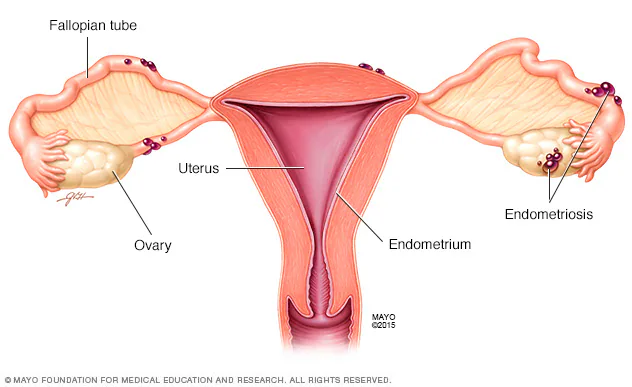
Endometriosis and infertility:
Endometriosis is one of the leading causes of infertility because tissue grows in places where it doesn’t belong and can ultimately interfere with how a sperm and egg move to meet each other at conception. Endometriosis affects nearly 1 in 10 people assigned female at birth.
How do I know if I have endometriosis?
Providers often say the only definitive method of diagnosis is through laparoscopic surgery, which allows direct visualization and biopsy of affected tissue. Other specialists argue that highly skilled ultrasound practitioners can identify endometriosis in a non-invasive way. This has to be done with training that is not typically provided in standard medical school and only limited practitioners are able to currently diagnosis in this way. MRI’s, CT’s, and transvaginal ultrasound are other ways to determine if there are signs of endometriosis (Endometriosis Foundation of America, n.d.). Another key part of diagnosis is thoroughly going through medical history and a symptom review with a specialist. Routes for diagnosis of endometriosis is something continuing to be studied for effective non-invasive options.
Ethical Problems
This disease is chronically under-diagnosed for various reasons. Some providers only intervene when a person is trying to conceive, reducing that person’s body to its reproductive function instead of addressing the pain that person may be experiencing. Pain is often also dismissed and patients are told that the symptoms they’re experiencing are normal, while the patient then leaves without proper diagnosis or treatment. Often someone may experience an incorrect diagnosis of a different pelvic health condition, further delaying proper diagnosis of endometriosis. Additionally, many providers are not well versed on endometriosis, and some of which may provide surgery that does not properly address the tissue or sometimes even cause more harm. This leaves patients feeling exhausted and cheated by a system that is suppose to be there to help them.
Often, it takes women 7 to 10 years to get a diagnosis. This timeline may be expanded for black women in particular due to racial discrimination in healthcare. Research also suggests that women of color are often more likely to receive a hysterectomy than white women and less likely to undergo minimally invasive surgery (Barnes et al., 2021). This is additionally problematic since hysterectomy does not appropriately treat endometriosis.
Trans and non-binary people with endometriosis face additional difficulties with access to diagnosis and treatment. This may include limited access to safe and affirming healthcare, as well as exclusion in an already limited body of research.
People with endometriosis and healthcare providers who specialize in it are continuing to push for more advocacy and improved healthcare for those with the condition. Many celebrities impacted by endometriosis have also spoken out to help promote the conversation. Some of which are: Amy Schumer, Chrissy Teigen, Susan Saradon, Dolly Parton, Tia Mowry, Bindi Irwin, Emma Roberts, Barbara Palvin Sprouse, and more. As the conversations and awareness improve, ideally the diagnosis and treatment for endometriosis will continue to improve as well.
What does endometriosis look like?
On the left is an image of pelvic organs without endometriosis present, and on the right are pelvic organs such as the bladder, uterus, and rectum, with endometriosis present. Images below used with permission from Pelvic Guru®, LLC as a Pelvic Global Member
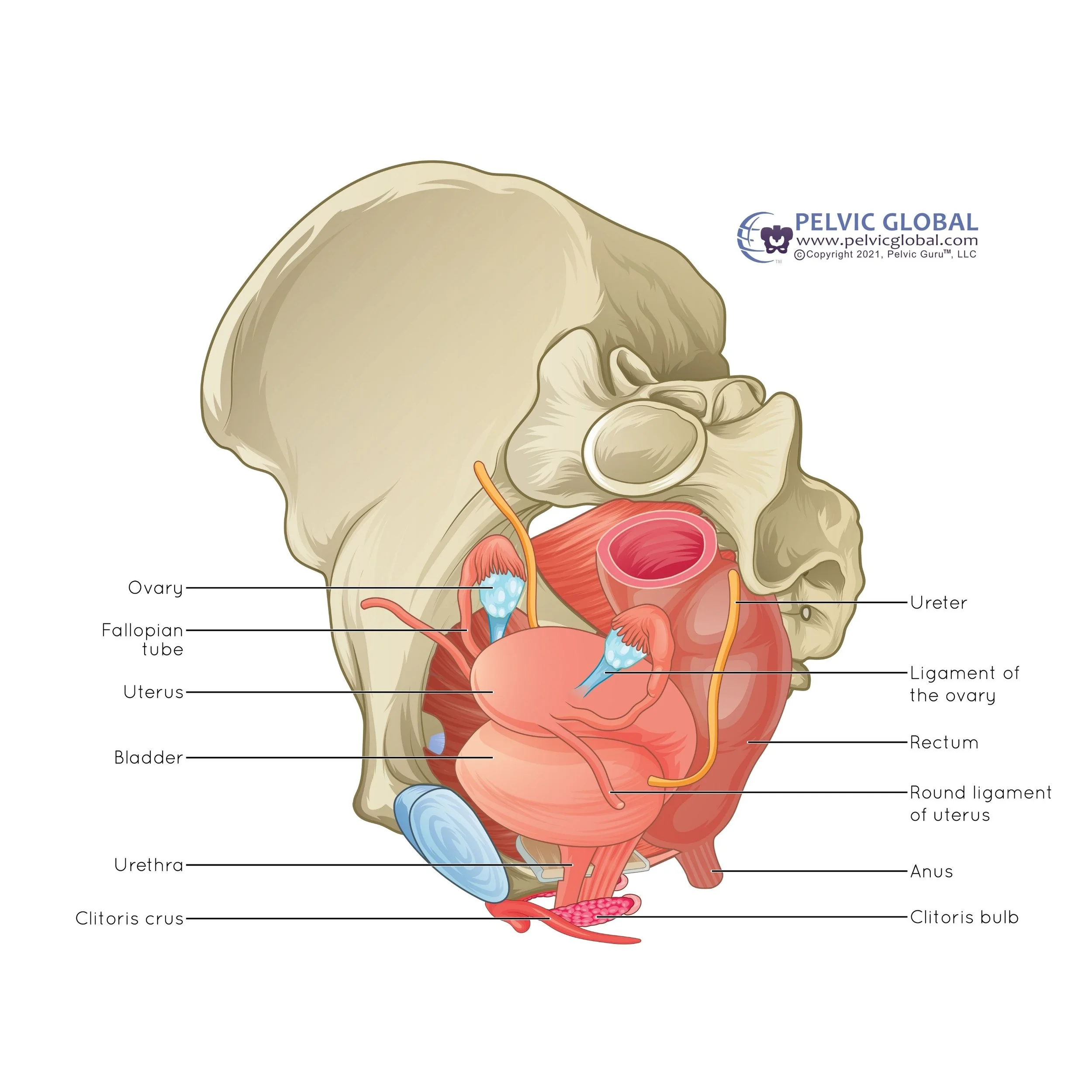
Pelvis and pelvic organs without endometriosis present
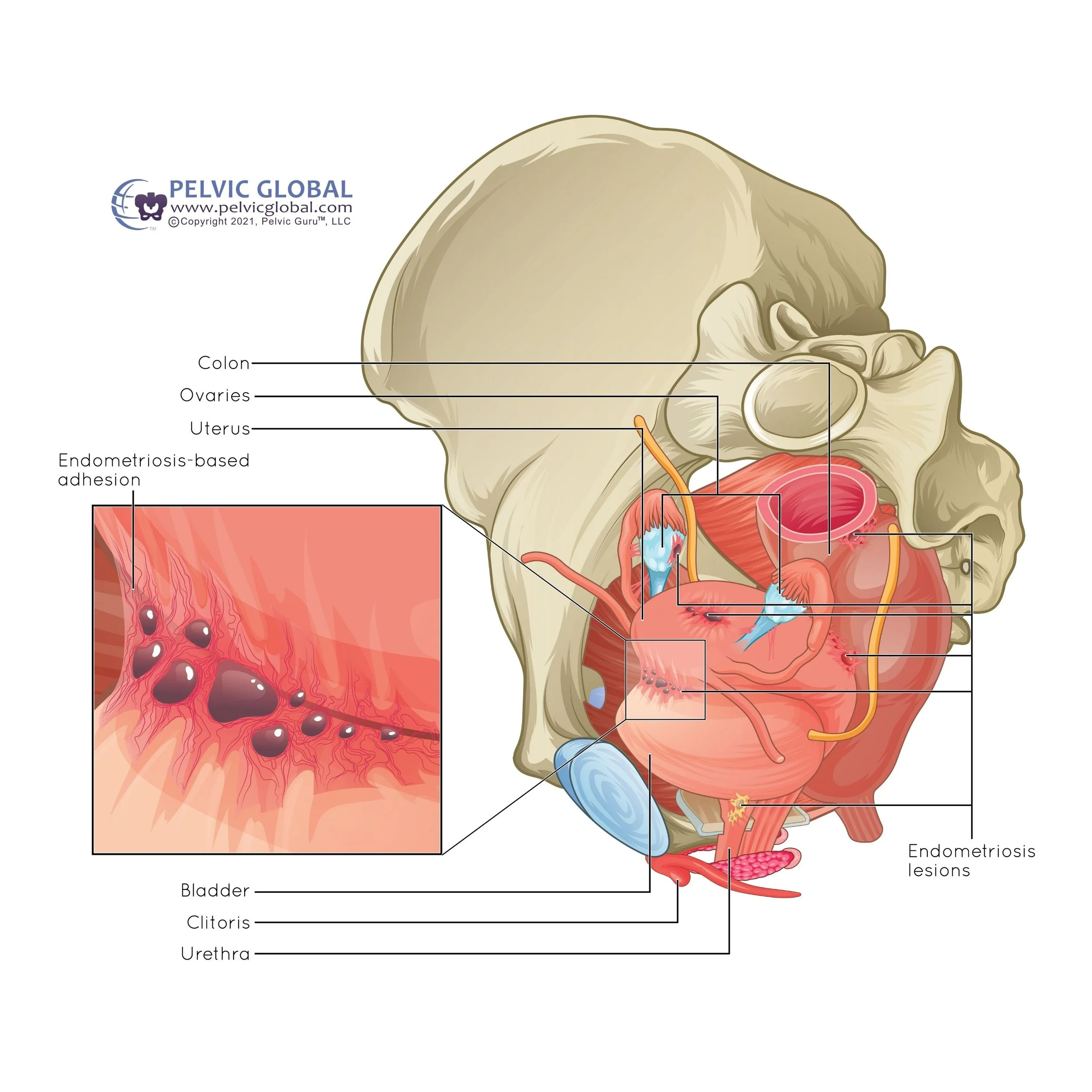
Pelvis and pelvic organs, such as bladder and uterus, with endometriosis present
How do I treat my endometriosis?
There are no definitive cures for endometriosis; however, research has been done on effective ways to manage the pain. Currently the gold standard in properly treating endometriosis is excision surgery of all of the endometrial tissue present. This must be done by a provider who is truly specialized in treating endometriosis, in order to properly remove all of the affected tissue. Your healthcare provider should be trained to give you a treatment plan based on your age, plans for pregnancy, severity of pain, etc. (Cleveland Clinic, n.d.). Some medical treatments include birth control or anti-inflammatories. Often these methods may be a first line of defense. New reports suggest that GLP-1s allow for some pain relief for endometriosis patients. This may be due to the anti-inflammatory properties that are found in GLP-1s (Dr. Shanti Mohling, 2026). There has been no formal research done on this topic, but it is a hopeful avenue for patients with endometriosis and their non-surgical pain control.
How does pelvic floor therapy help with endometriosis?
Pelvic floor therapy can help with endometriosis and management of subsequent pain. This includes:
Pain re-processing techniques to reduce intensity of pain at a neural level
Pelvic floor tension reduction and training in how to relax these muscles and increase blood flow to support the tissues
Support in reducing common symptoms such as: pain with sex, bowel issues, and bladder issues
Optimizing daily pelvic health habits including breath, bowel practices, bladder practices, and other daily habits
Improves daily life and provides tools in pain management strategies for self management of pain flares
Support in self advocacy and navigation of the medical system that often feels like an uphill battle to receive proper treatment
If you have endometriosis or any of these symptoms It may be worth trying if pelvic floor therapy is right for you:
Severe cramps or pelvic pain that persists during or outside your period
Heaviness, deep pressure, or spasms at the pelvic floor
Low back pain
Pain with sex or vaginal insertion
Painful bowel movements or frequent straining
Difficulty relaxing to urinate, urinary frequency, or leaking
Tightness in your hips, pelvis, lower back, or other areas of the body
For more education on endometriosis, or a directory to find surgeons and other healthcare providers, visit I Care Better.
Works Cited
Barnes, W. A., Carter-Brooks, C. M., Wu, C. Z., Acosta, D. A., & Vargas, M. V. (2021). Racial and ethnic disparities in access to minimally invasive gynecologic surgery for benign pathology. Current opinion in obstetrics & gynecology, 33(4), 279–287. https://doi.org/10.1097/GCO.0000000000000719
Endometriosis Foundation of America. (n.d.). Endometriosis treatment & support. Retrieved October 7, 2026, from https://www.endofound.org/endometriosis-treatment-support
Cleveland Clinic. (n.d.). Endometriosis. Retrieved October 7, 2026, from https://my.clevelandclinic.org/health/diseases/10857-endometriosis
Endometriosis Foundation of America. (2026). Could GLP‑1 shape the future of endometriosis care?. In The Endometriosis Podcast. Spotify. https://open.spotify.com/episode/3mWLnlLkpcbpFsFEO1CBa4
Written By Qwinn Selmer-Spong, Undergraduate Student at University of Denver, Kinesiology, 2028 with supervision from Gina Inglese, OTR/L
Anxious Pelvis offers trauma-informed pelvic floor occupational therapy, virtual coaching, & education for pelvic pain, vaginismus, painful sex, bladder and bowel dysfunction, pregnancy, postpartum, perimenopause, and gender-affirming care.
Denver Clinic: 3801 E Florida Ave, Suite 915, Denver, CO 80210
Virtual care through our coaching & education services available worldwide.
By Anxious Pelvis | Pelvic Floor Occupational Therapy in Denver, CO & Virtual Coaching Worldwide
Remember: this post is for informational purposes only and may not be the best fit for you and your personal situation. It shall not be construed as medical advice. The information and education provided here is not intended or implied to supplement or replace professional medical treatment, advice, and/or diagnosis. Always check with your own physician or medical professional before trying or implementing any information read here.