
You deserve a life free from unwanted pelvic pain

Your body is not broken!Compassionate, evidence-based vaginismus treatment. We help women and people with vulvas reclaim intimacy, comfort, and confidence — at their own pace, without shame.
When insertion is painful — or seemingly impossible
Vaginismus is the unintentional tightening or spasming of the pelvic floor and vaginal muscles in response to attempted penetration. It can affect tampon use, gynecological exams, sex, and dilator insertion.
You’re not broken, and it’s not "all in your head" either. It is a real, treatable neuromuscular condition. You are not alone in this experience of symptoms, and at Anxious Pelvis, you’re no longer alone in navigating how to get better either.
Many people with vaginismus experience significant distress, avoidance behaviors, and impacts on relationships and self-image. Pelvic floor occupational therapy addresses all of these dimensions, not just the physical symptom.
Burning or stinging with insertion
Pain during sexual intercourse
Inability to engage in intercourse
Inability to insert a tampon
Pelvic floor muscle spasms
Pain during gynecological exams
Tightness and pelvic pressure
Anxiety around sexual intimacy
Feeling like "hitting a wall"
Vulvar or vaginal burning at rest
Avoidance of all penetration
You may be experiencing:
Often these symptoms lead those with vaginismus to feel…
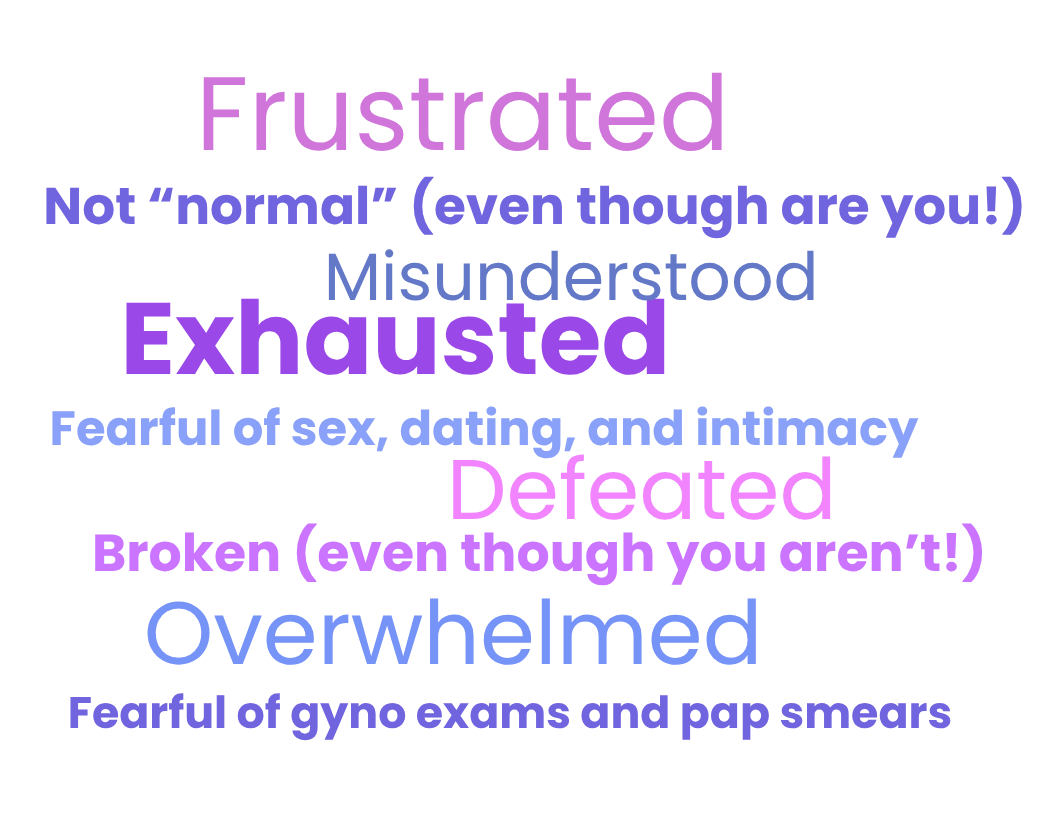
You are NOT alone.
A whole-body approach rooted in holistic care and pain science
Nervous System Regulation
Addressing vaginismus can sometimes feel vulnerable or intimidating. Nervous system regulation strategies help ease this anxiety and bring the body’s protective threat response down, which can also change your body’s perception of sensations and how you experience pain or pleasure. u
Using movement, grounding techniques, breathwork, and vagal toning, and more to shift your body out of guarding mode.
As a pelvic floor occupational therapist, I look beyond the pelvic floor muscles to understand how your medical history, hormones, scar tissue, nervous system, lived experiences, and daily occupations contribute to your pain. Healing from vaginismus is a journey — and every step is yours to take.
Pelvic Floor Muscle Retraining
Hands-on and guided exercises to gently restore coordination, flexibility, lengthening, and strength to the pelvic floor musculature — including internal techniques only when you feel safe and ready, and paired with your nervous system regulation tools.
Progressive Dilator Therapy
A gradual, consent-centered desensitization program using vaginal dilators may be included in your care plan. We move at your pace, with zero pressure. You are always in full control of your body and your treatment plan, and plans care catered to your specific needs and preferences.
Pain Neuroscience Education
Understanding why your body developed this protective pattern is a key part of rewiring it. We explore the biopsychosocial model of pain so you can recognize and respond to your body's signals with compassion. We use pain reprocessing techniques to work with the fear response to sensations and create an equation for neutrality, ease, connection, and even pleasure.
Intimacy & Relationship Support
Vaginismus can affect how you engage with partners and relationships. We offer resources, communication tools, sex counseling, and — when helpful — partner-inclusive sessions to support connection and intimacy throughout recovery.
Occupation-Centered Goal Setting
Your goals guide everything. Whether that's pain-free sex, tampon use, a comfortable pelvic exam, or simply feeling safe in your body — we build your treatment plan around what matters most to you.

Training grounded in empathy and science.
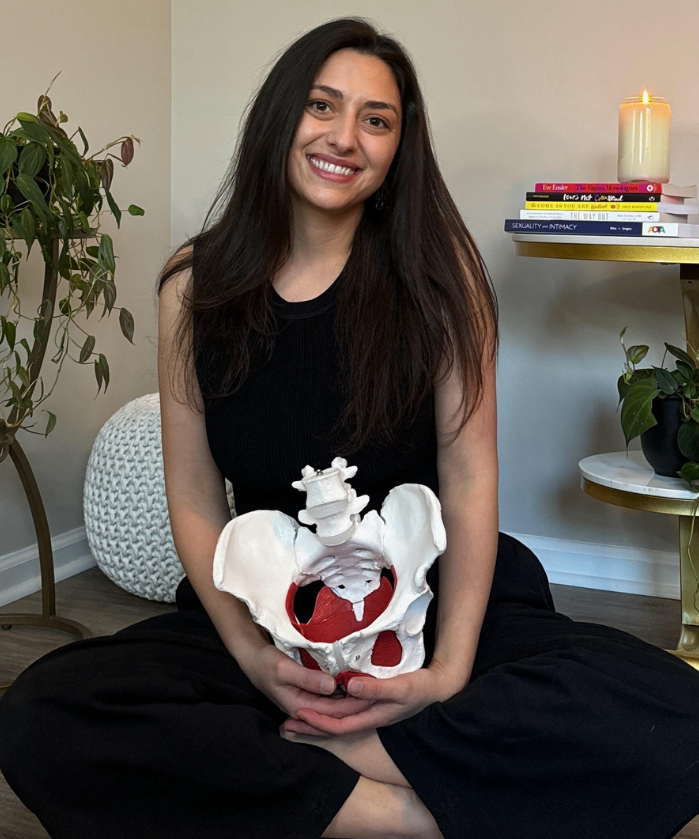
Hi, I’m Gina (she/her), a pelvic floor OT. I founded Anxious Pelvis Clinic in Denver because I believe pelvic pain care should feel nothing like the cold, clinical encounters many people have experienced. My work is informed by occupational science, pain science, trauma-informed practice, embodiment, and a deep respect for the mind–body connection.
I specialize in vaginismus, vulvodynia, dyspareunia, pelvic floor hypertonicity, and complex pelvic pain conditions. I approach every person as a whole human being, not just a diagnosis.
Registered Occupational Therapist (OTR/L
Certified Clinical Trauma Specialist (CCTS-I)
Certified Sexuality Occupational Therapist (CSOT)
Pelvic Sex Counseling Certificate
Holistic Pelvic Floor Therapy Provider
Mindfulness Based Approaches
Trauma Informed Care Provider
Pelvic Floor OT Specialist
I offer in-person sessions in Denver, Colorado and telehealth consultations for self-directed home programs paired with live support.
Answering what you might be afraid to ask
These are the questions we hear most often about vaginismus treatment. No question is too embarrassing, too sensitive, or too small.
-
Yes — vaginismus is a treatable pelvic pain condition.
Treatment timelines vary, but progress is almost always possible at any age or stage. It takes a holistic approach since the causes of vaginismus are multifactorial. With the right support and approaches, you can start seeing progress you didn’t even think was possible. -
No, Colorado is a direct access state. You can contact us directly to schedule your free discovery call.
-
Internal assessment can be a helpful part of pelvic floor therapy, but it is never required, never rushed, and always consent-based. Many meaningful treatment goals can be worked toward without any internal work, especially early in treatment.
You’re the leader in your care, we are your guide. -
Vaginismus refers specifically to pain or limitations with insertion into the vaginal canal.
Vulvodynia is chronic vulvar pain. The vulva is the external area of the genitalia.
These conditions often co-occur, and our occupational therapy approach addresses both effectively.
This may also include referrals for trusted gynecological care.
-
Absolutely. Many clients come to us as single individuals who want to address pelvic pain for their own wellbeing, for medical procedures, or simply to understand and feel relief in their own body. Your goals are valid regardless of your relationship status. Treatment may include partner work, but it definitely does not need to.
Your pleasure, your body, your goals.
-
Yes. While some aspects of pelvic floor care benefit from in-person sessions, a substantial portion of vaginismus treatment — including education, pain reprocessing training, nervous system work, trigger point release, mindset coaching, and home dilator programs — can be delivered effectively via telehealth.
For those in Colorado or Pennsylvania, you can do telehealth sessions through the clinic. For anyone else, no matter where you live, you can book a coaching intake through our online platform.
You don't have to keep pushing through the pain
Relief is possible. Whether you've been struggling for months or years — there's a path forward, and we'll walk it with you. Your free consultation is a safe, judgment-free space to begin.